Last updated July 2026 · Stay Off The Roof — Outdoor Lighting Experts · ROC #344820 · Phoenix metro
Outdoor lighting improves curb appeal by giving your home a second appearance — the one it has for the twelve hours a day nobody plans for. A house that’s been carefully landscaped and freshly painted looks like a dark rectangle from 7pm onward unless something is lighting it. Below are nine specific things that make the biggest difference, roughly in the order we’d tackle them.
1. Start at the front door
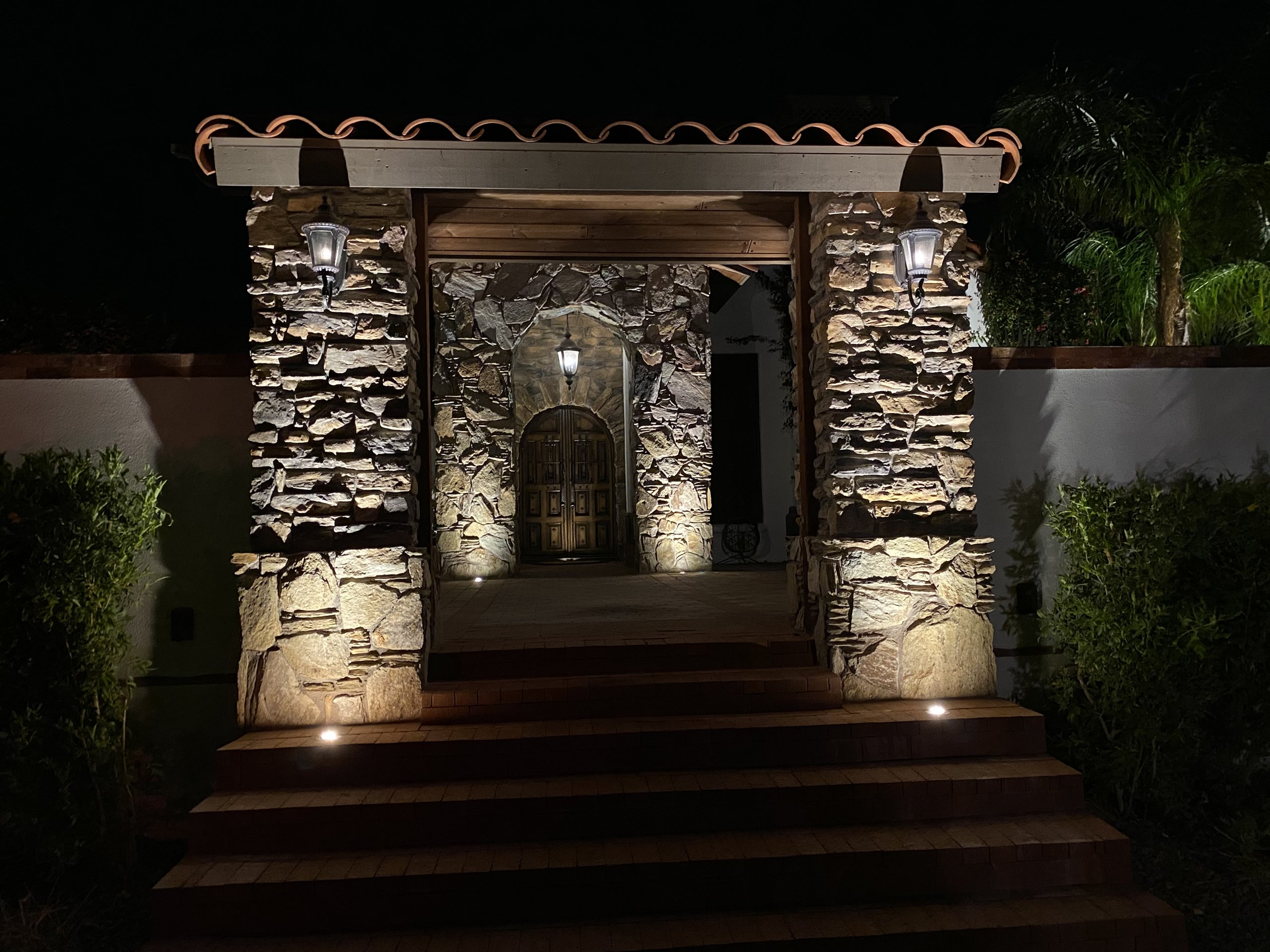
The entry is where every visitor’s eye lands first, and it’s the single highest-return fixture on the property. Light the door surround and the house numbers — not with a porch bulb blasting outward, but with something washing the surface so the entry reads as a destination from the street. If a delivery driver can’t find your address at night, neither can your curb appeal.
2. Uplight your best tree
One mature mesquite, palo verde, or saguaro lit from below does more for a front yard than a dozen small fixtures scattered around. Uplighting throws the canopy structure into relief and casts shadow across the wall behind it, which adds depth to a façade that would otherwise read flat. In desert landscapes this is the highest-impact move available — we go deeper on it in desert landscape and tree uplighting. If the tree in question is a saguaro, see uplighting a mature saguaro without damaging it — the plant is protected, and where the fixture goes matters more than usual.
3. Wash the façade — don’t spotlight it
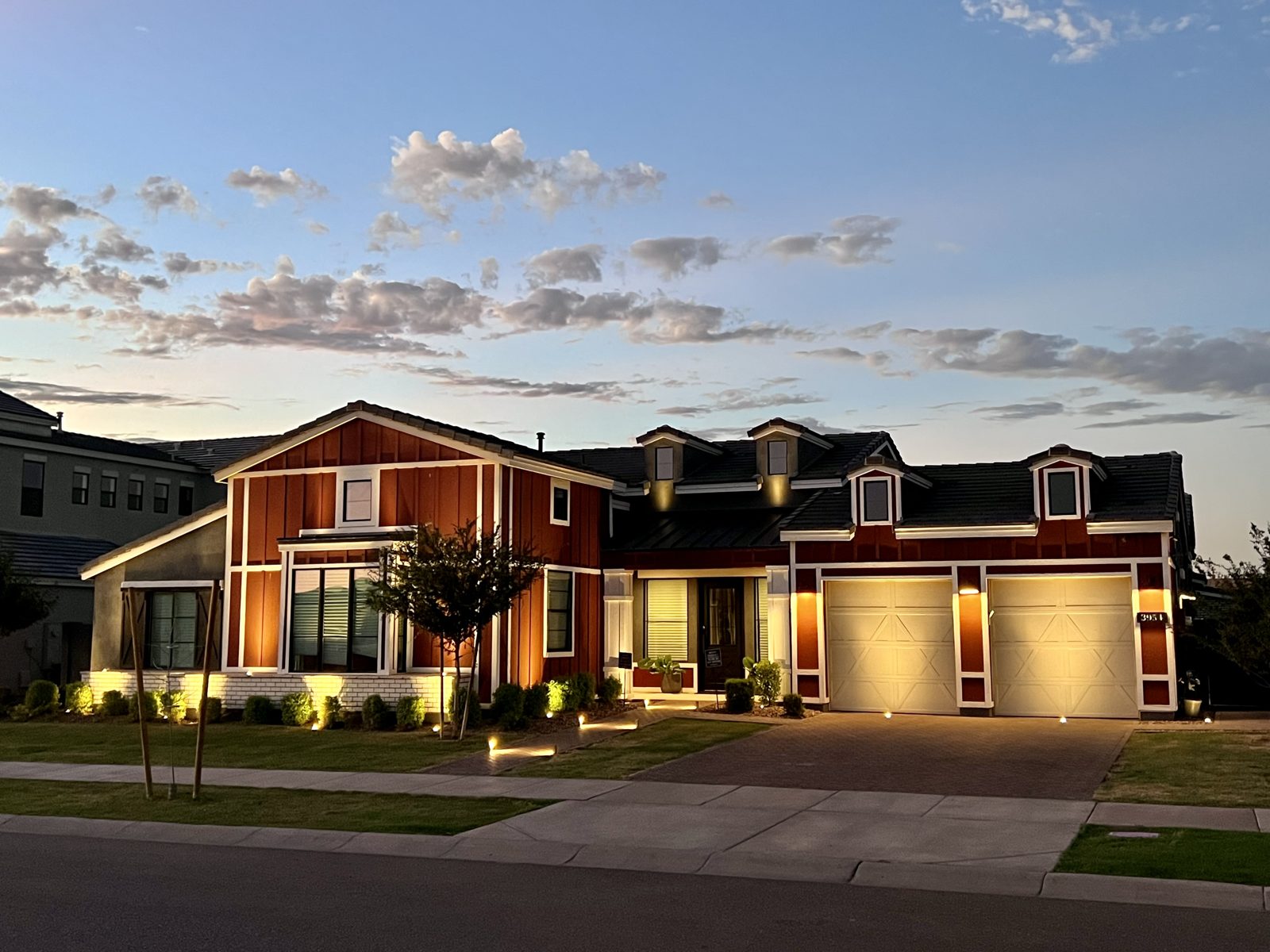
There’s a real difference between washing a wall and putting a hot spot on it. Washing means even, soft light across the whole surface. Grazing means setting the fixture tight to the wall so light rakes across it at a shallow angle, which makes stucco texture, stone, and block pop dramatically. Both look intentional. A single bright spot in the middle of a wall looks like a mistake.
4. Light the walkway, not the walkers
Path lighting is where most DIY jobs go wrong. Identical fixtures marching down both sides at even spacing creates the airport-runway effect, and unshielded fixtures throw glare into the eyes of anyone walking toward the house — which makes the path harder to see. Stagger the fixtures, space them so the pools of light just meet, and aim everything down at the surface. More on the specifics in pathway lighting.
5. Don’t forget the garage doors
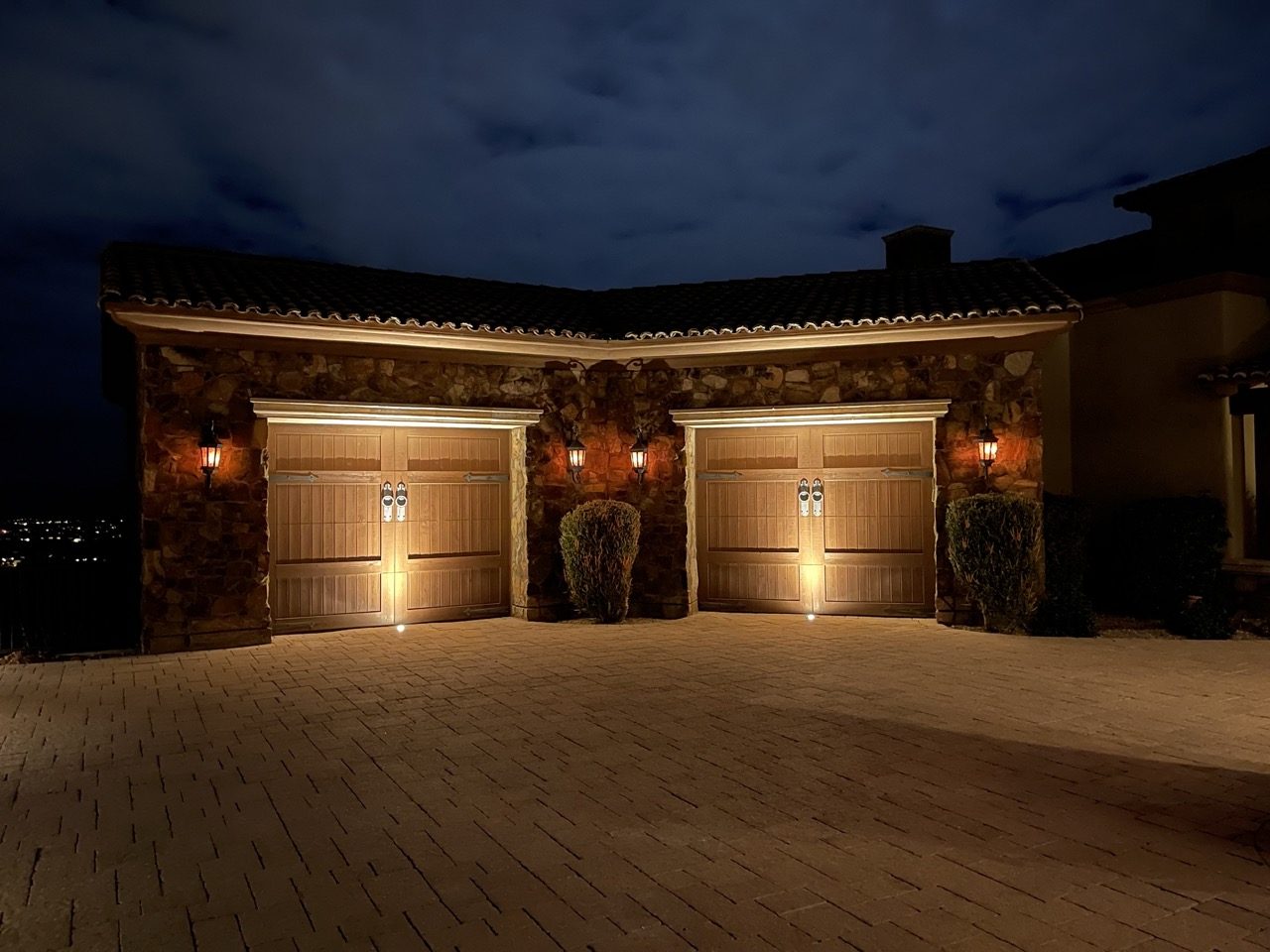
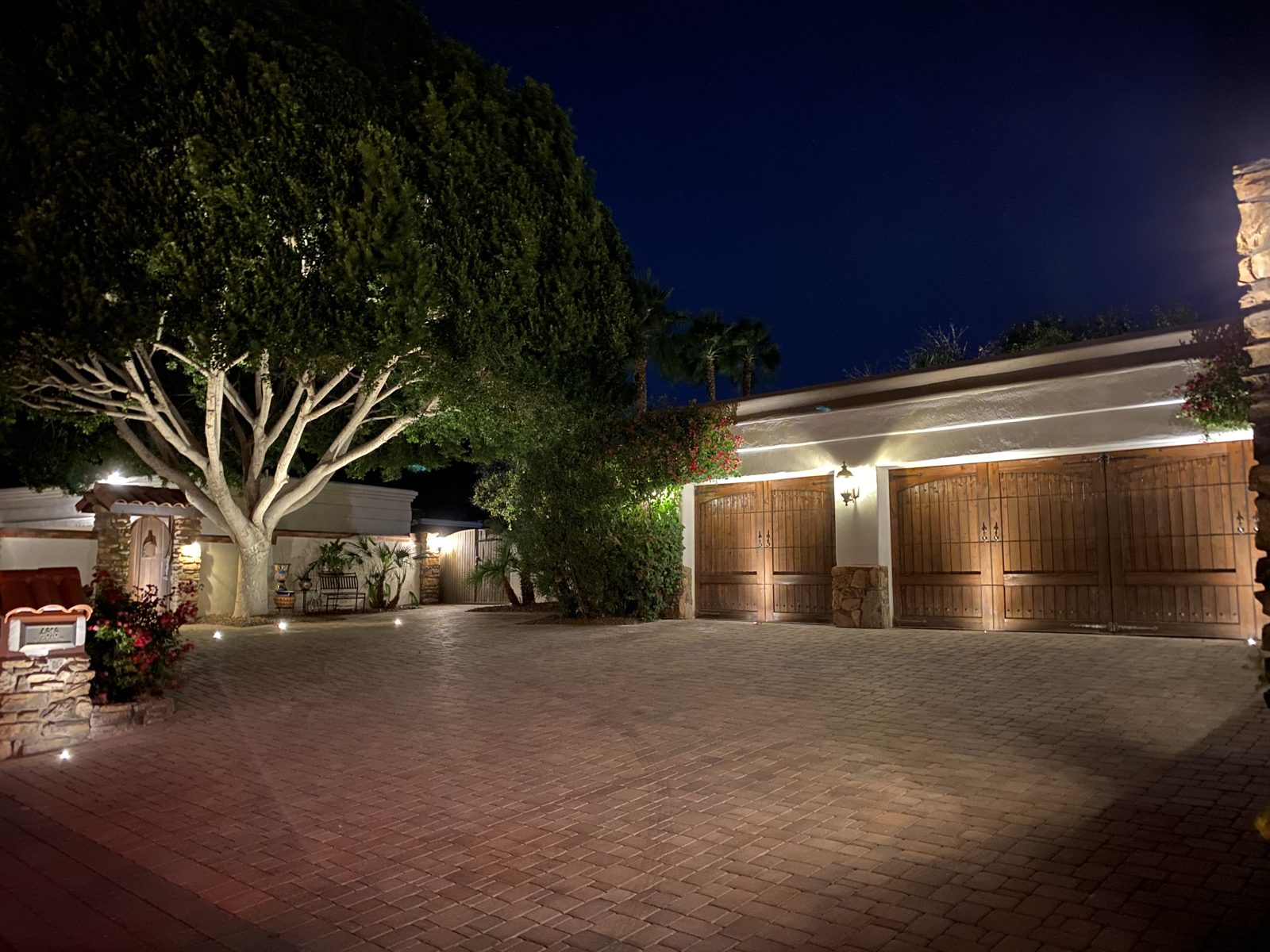
On most Phoenix production homes, the garage is the largest single element of the front elevation — and it’s almost always left dark. Lighting the garage doors or the wall above them balances the composition and stops the house looking like it’s leaning toward the lit side. It’s the least glamorous item on this list and one of the most noticeable once it’s done.
6. Add light from above
Downlighting — sometimes called moonlighting — means mounting fixtures high in a tree or on the structure and letting light fall downward through the branches. It produces soft dappled patterns on the ground and looks more like natural moonlight than anything shining upward. Where you have something to mount to, it’s the most sophisticated-looking option available.
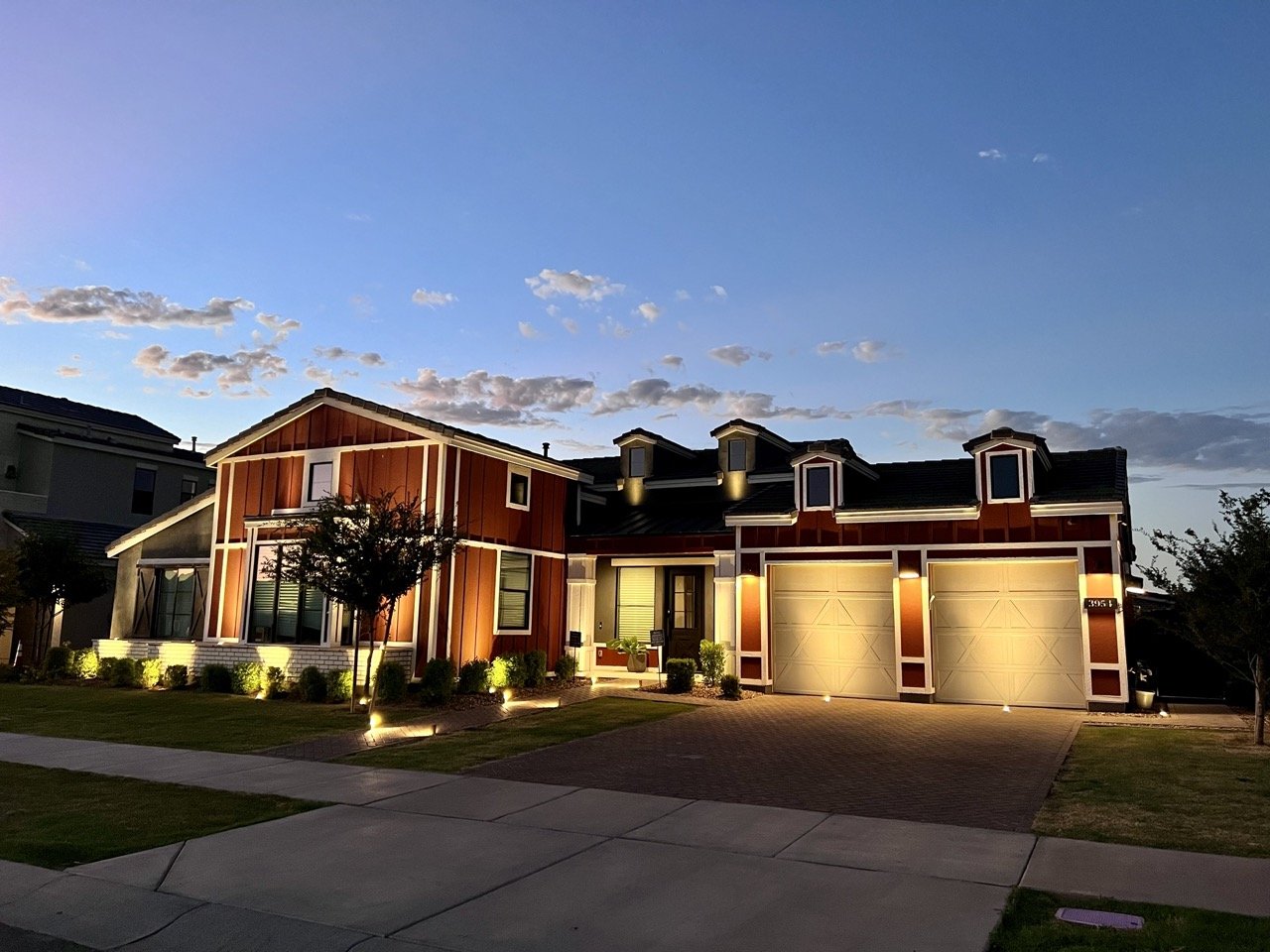
7. Pick out the architecture
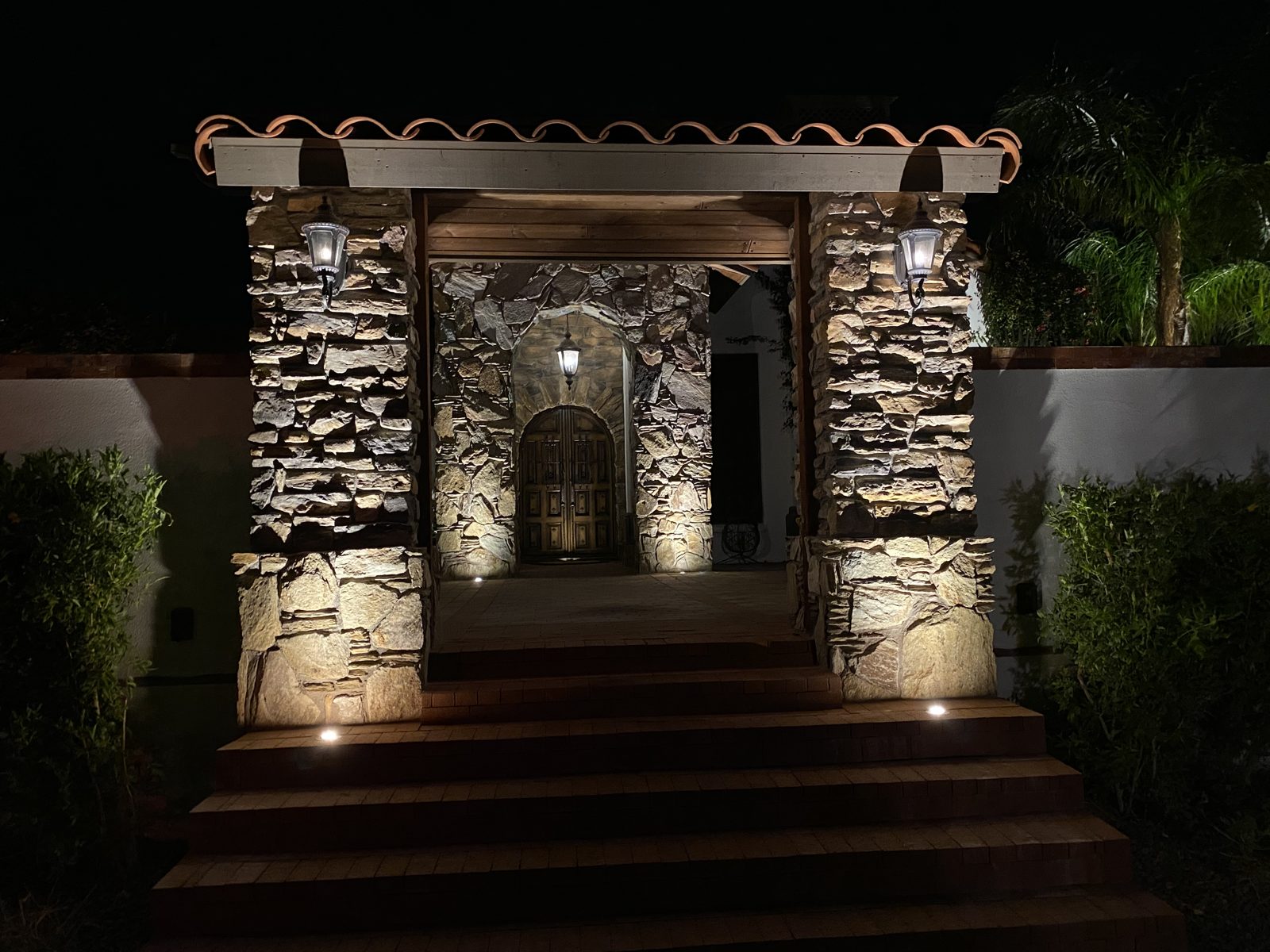
Columns, arches, parapets, portico details, courtyard walls — whatever the architect actually did with your house, lighting it is how you get credit for it at night. This is the difference between a lit house and a designed one, and it’s the core of architectural lighting. It works especially well on Santa Fe, Tuscan, and territorial homes where the massing itself is the feature.
8. Outline the roofline — all year
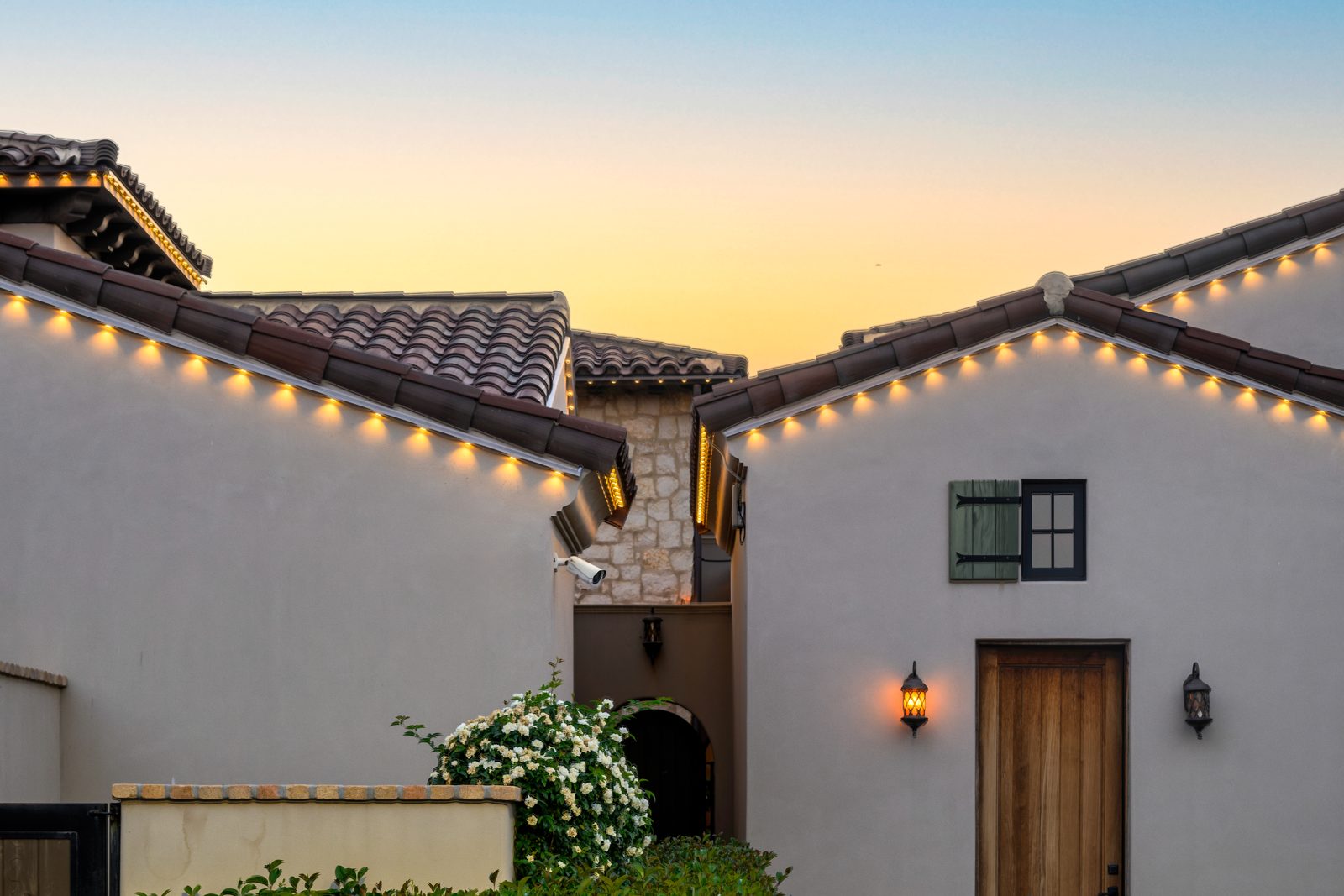
Permanent trim lighting draws the shape of the house against the sky. Most people install it for the holidays, but the year-round warm white setting is what actually earns it — a crisp architectural outline every night, invisible during the day, no ladders involved. Roofline light and ground light together are what make a home read as fully composed rather than half-lit.
9. Keep the colour temperature consistent
This is the one that quietly undoes the other eight. If your path lights are warm, your uplights are cool blue-white, and the porch fixture is somewhere in between, the whole front of the house looks accidental no matter how good the individual placements are. Pick one temperature — warm white for most homes — and hold it across every fixture. It’s the single most common reason a yard full of expensive lighting still looks cheap, and it costs nothing to get right if you plan it from the start.
Where to start if you’re only doing one thing
Entry plus one uplit tree. Those two fixtures change the whole read of a house from the street, and everything else builds outward from there. Most of our clients start with the front yard and add the back later once they’ve seen what it does — see landscape lighting for how a full design comes together, or security lighting if the dark side yards are what’s actually on your mind.
Frequently Asked Questions
Does outdoor lighting actually add value to a home?
It reliably improves how a home presents, which matters most at listing time — evening showings and photography both depend on it. Treat any specific percentage figure you see quoted with caution; the honest answer is that lighting affects perceived quality and first impression rather than appraised value directly.
What colour temperature is best for outdoor lighting?
Warm white suits most homes and desert landscapes, and it’s flattering on stucco, stone, and adobe. The specific number matters less than consistency — mixing warm and cool fixtures across one façade is what makes a design look unplanned.
How many fixtures does a front yard need?
It depends entirely on what’s being lit — a single mature tree may take two or three fixtures on its own. Rather than counting fixtures, count features: the entry, the best tree, the façade, the walk, and the garage is a solid starting scope for most Phoenix front yards.
What does outdoor lighting cost in Phoenix?
Our packages start at $2,500, and a typical Phoenix front-yard design runs $3,000 to $7,000 installed. Fixture count and type, wire runs, and whether wire has to route under existing hardscape are what move the number. Financing is available.
See what your home looks like lit.
Free after-dark design consultation from a local, licensed crew. We design. You shine.